Positive Behaviour for Learning School
Rochedale South State School adopted the Positive Behaviour (PBL) Framework in 2018. This whole school approach provides differentiated teaching and learning which deliberately prepares for, and responds to, the diverse needs of all students to maximise engagement.
The language of our universal 4 expectations is: Be Safe, Be Responsible, Be Respectful and Be a Learner, and are embedded in every classroom and team to ensure the learning behaviours and expectations are consistent across the school. This is underpinned through all Staff interactions.
Explicit teaching is delivered through:
- Fortnightly lessons in classroom, including class discussions, role play and activities
- Messages on assembly
- Proactive programs run by our school Chaplain, PBL team and Guidance Officer
We believe in focusing on the positive and acknowledging appropriate behaviours as much as possible:
- Positive emails home
- Student of the Week awards presented during Assembly
- Principal's morning tea
- Classroom rewards systems
- Year Level end of term rewards
The school operates a Positive Behaviour for Learning committee which meets each fortnight to discuss school based behavioural data, establish behaviour focuses for explicit teaching each fortnight and review/update Positive Behaviour for Learning operations and processes across the school. The PBL team effectively uses data to change outcomes through reviewing systems, processes and practices.
Student Well-Being
Personal and Social Capabilities
The Personal and Social capability provides a foundation for students to understand themselves and others, and navigate their relationships, lives, work and learning. Students with well-developed social and emotional skills find it easier to manage themselves, relate to others, collaborate, develop empathy, set goals and resolve conflict. They feel positive about themselves and the world around them.
These Capabilities are a core part of the curriculum designed to help students build essential life skills. They encourage children to understand themselves, manage their emotions, foster healthy relationships, and make responsible decisions. Each term, lessons focus on developing key skills.
Term 1: Self-Awareness: Recognising, understanding and reflecting upon their emotions, values and strengths. Through self-awareness, students become better at identifying what motivates them and strategies to develop an appreciation of their personal qualities and areas for growth.
Term 2: Self-Management: Regulating their emotions and behaviours in different situations by utilising skills like resilience, self-discipline, and perseverance. Self-Management equips students to manage and evaluate their emotional responses.
Term 3: Social Awareness: Developing empathy, respect, and an understanding of others' feelings and perspectives. This aspect helps students recognize the diversity around them and encourages them to be open-minded and inclusive.
Term 4: Social Management: Effective communication, conflict resolution, and teamwork. Students learn to build and maintain positive relationships, resolve disagreements constructively, and work well in groups. These skills help them navigate social situations with greater ease and cooperation.
Developing these capabilities equips students with skills they'll use throughout life. From managing emotions to working well with others, these abilities help children make better decisions, foster positive relationships, and grow into responsible, empathetic adults. Parents and Carers can support these skills at home by modelling healthy communication, encouraging empathy, and providing opportunities for children to work on self-discipline and social problem-solving.
Restorative Conversations
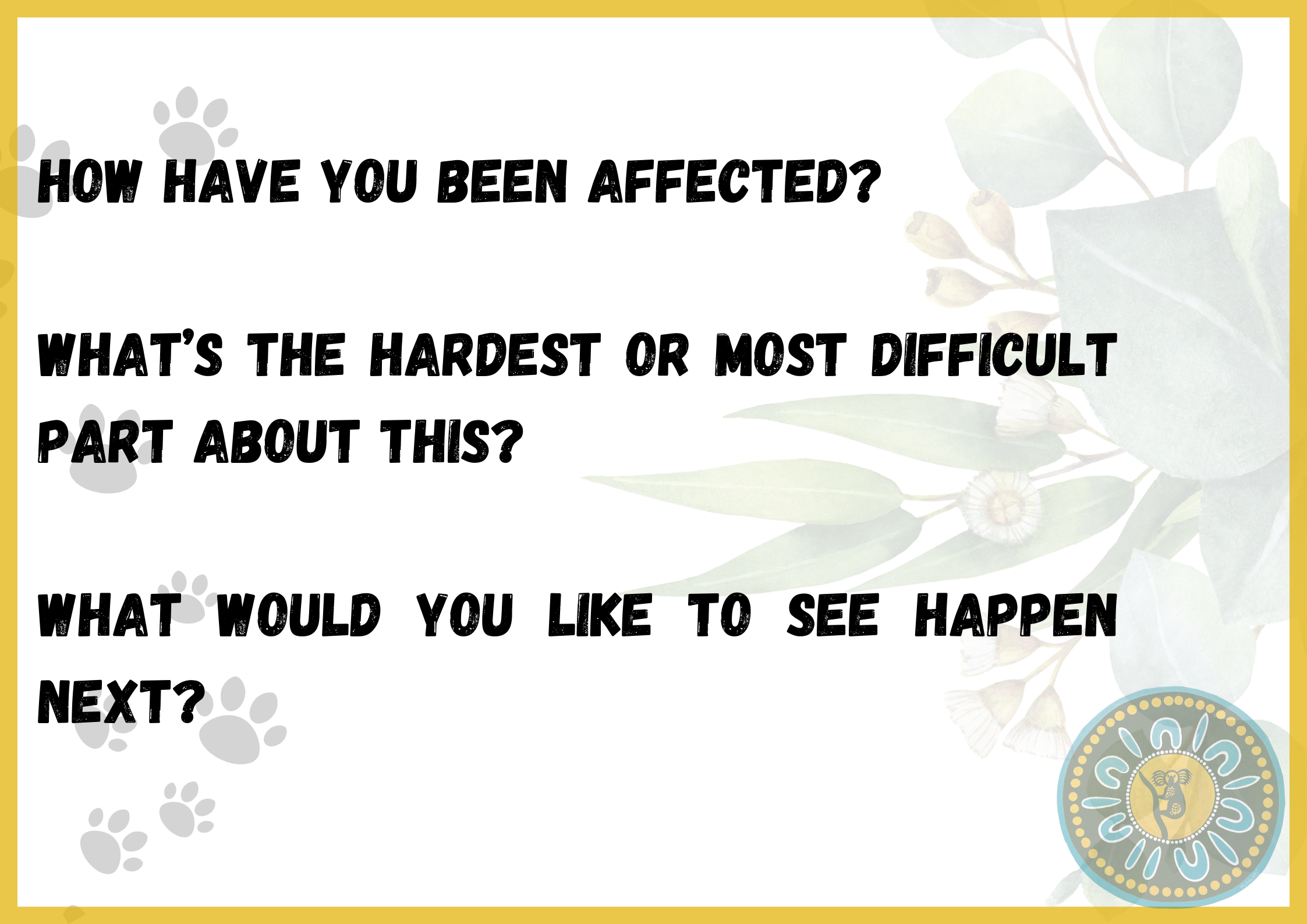
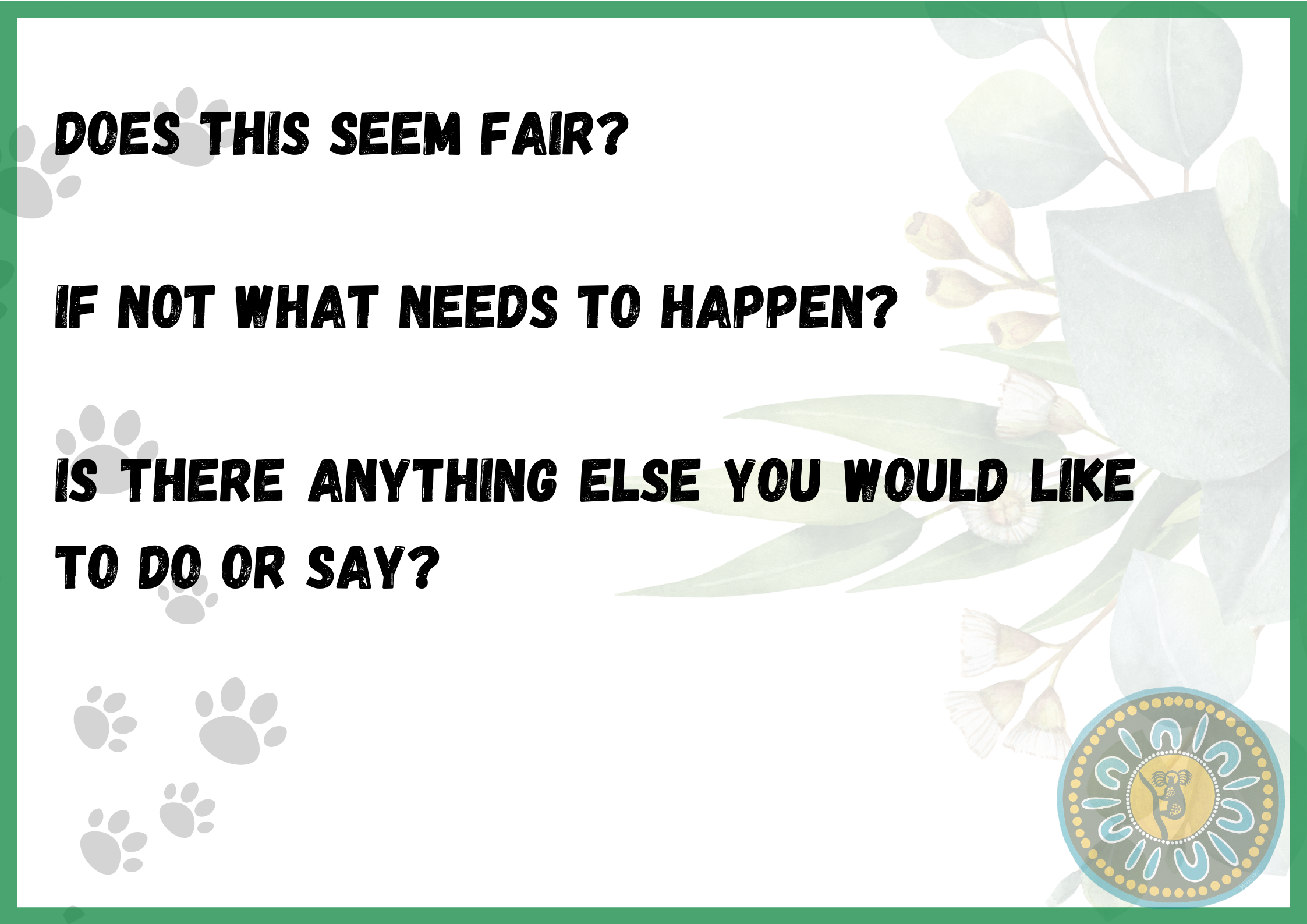
Restorative conversations are structured conversations to repair relationships and resolve conflicts. These conversations help students address misunderstandings, take responsibility for their actions, and work collaboratively to find a positive way forward. Restorative Conversations helps resolve conflict providing voice to the aggrieved parties and voice in the resolution.
<Posters>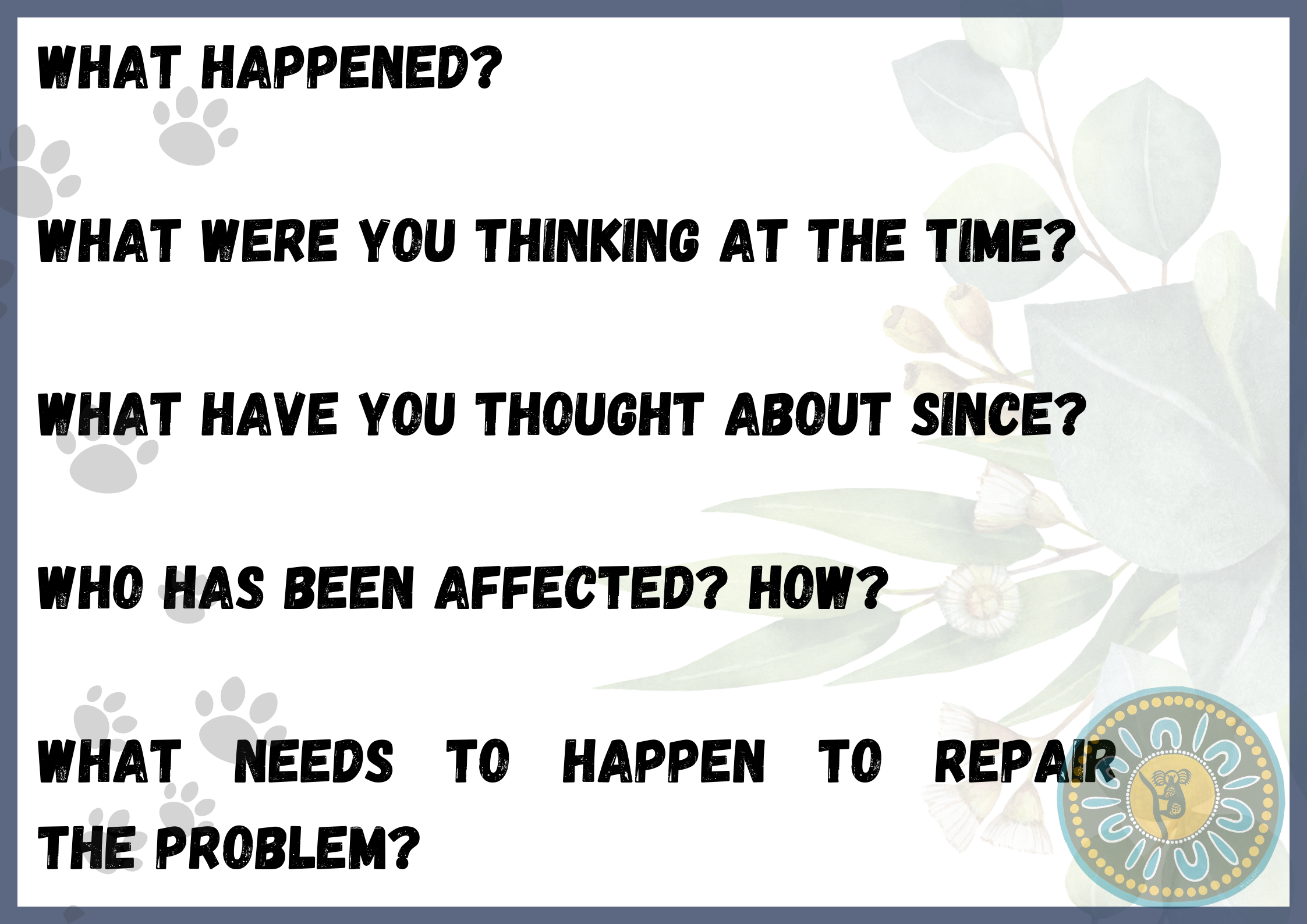
 High 5 Strategy
The High 5 Strategy gives students a structured approach to handle minor conflicts on their own, building resilience and independence. Parents and Carers can support this at home by role playing these options with their child, reinforcing the idea that not all conflicts require adult intervention, but it's okay to seek help when needed.
Here's a breakdown of each of the five options for students:
Ignore: Sometimes ignoring minor annoyances prevents conflicts from escalating. This step encourages children to avoid overreacting and to see if the issue resolves on its own.
Talk Friendly: If ignoring doesn't work, children are encouraged to use friendly, calm language to express how they feel or what they'd like the other person to do. This step teaches respectful communication and helps children learn to advocate for themselves in a positive way.
Walk Away: When the first two steps aren't effective, children can walk away from the situation to give themselves and the other person some space. This reduces the chances of arguments escalating into bigger conflicts and encourages self-regulation.
Talk Firmly: If the issue continues, children are encouraged to talk firmly—still politely, but more assertively. This might mean using a stronger tone or making it clear that they're uncomfortable with the behaviour, which helps build confidence in expressing boundaries.
Report to a Teacher: If the situation hasn't been resolved after trying the first four steps, children are encouraged to seek help from a teacher or another trusted adult. This ensures that children know when it's appropriate to involve an adult and helps them feel supported.
Bullying
Bullying is a pattern of behaviour where someone uses their power in a relationship to repeatedly hurt another person, whether through words, actions, or social exclusion. It can be physical, verbal, or social and is aimed at causing harm—physically, socially, or emotionally. Bullying can occur face-to-face or online and can be obvious (open) or hidden (sneaky).
Key Points About Bullying:
Power Imbalance: Bullying often involves someone who has, or thinks they have, more power over someone else. This imbalance makes the target feel helpless to stop the behaviour.
Repeated Behaviour: Bullying is not a one-time incident. It's something that happens repeatedly or has the potential to happen again, especially online, where messages or images can be shared repeatedly.
Forms of Bullying: It can take many forms, from physical actions like hitting to verbal insults, spreading rumours, or excluding someone from a group. Online bullying (cyberbullying) includes hurtful messages, images, or social media posts that target someone.
Impact: Bullying can have serious short- and long-term effects on everyone involved, including those who witness it.
Not Every Conflict is Bullying: Not all conflicts or fights between people are considered bullying. Bullying specifically involves a power imbalance and repeated behaviour.
Behaviours that do not constitute bullying include:
• mutual arguments and disagreements (where there is no power imbalance)
• not liking someone or a single act of social rejection
• one-off acts of meanness or spite
• isolated incidents of aggression, intimidation, or violence.